


Key Takeaways
- People wondering how accurate a prenatal paternity test is in the first trimester usually need the results early and urgently.
- A non-invasive prenatal paternity test can be done as early as 7 weeks, but from 8-9 weeks, results are more accurate.
- A prenatal DNA test is safe for the mother and baby, as there are no needles going near the womb.
You obviously have a good reason if you’re trying to get answers to questions such as, “Are prenatal paternity tests accurate?” And “How accurate is a prenatal paternity test in the first trimester?” The first trimester can feel like the longest stretch of the pregnancy. Many people start searching for prenatal DNA testing accuracy while pregnant in the first trimester because waiting until birth isn’t always practical, emotionally, legally, or financially.
The good news: modern non-invasive prenatal paternity testing (NIPP) can be extremely accurate in the first trimester when it’s performed at the right gestational age and processed by a high-quality, accredited laboratory.
Quick note: This article is educational, not medical advice. For personal medical questions, talk to your OB-GYN or a genetic counselor.
The Short Answer: How Accurate is a First-Trimester Prenatal Paternity Test?
A first-trimester prenatal paternity test can be over 99.9% accurate when:
- The pregnancy is far enough along to have a reliable fetal DNA level in the mother’s blood, and
- The samples are collected and handled correctly, and
- The lab uses validated methods and strong quality controls.
What can reduce how accurate a prenatal paternity test is in the end? “Real-world” accuracy is rarely from the genetics. It is usually the timing (not enough fetal DNA yet), sample handling, or choosing a low-quality provider.
If you’re considering whether prenatal paternity tests are accurate in the first trimester, you need this guide. The rest of this guide explains what prenatal DNA testing accuracy means, what changes week to week, and how to avoid inconclusive results.
How Non-Invasive Prenatal Paternity Testing Works (Simple Explanation)

Non-invasive prenatal paternity testing is based on cell-free fetal DNA (cffDNA), which are tiny DNA fragments from the placenta that circulate in the pregnant person’s bloodstream. Let’s see how accurate and safe a prenatal paternity test is
A standard NIPP process looks like this:
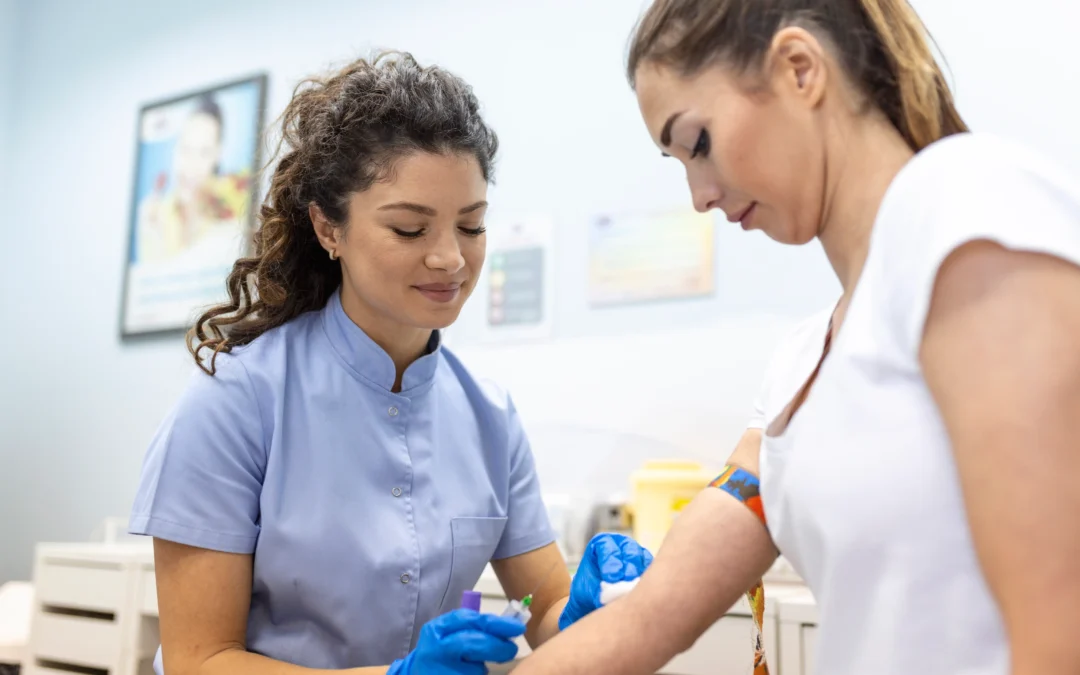
- A blood draw from the mother (to capture cffDNA plus maternal DNA)
- A cheek swab (or blood sample) from the alleged father
- The lab separates fetal DNA signals and compares them to the alleged father’s DNA
- The lab calculates a probability of paternity (inclusion) or excludes paternity
This is why a DNA test while pregnant in the first trimester can be done without needles going near the uterus or the baby.
Why Timing Matters in the First Trimester: Fetal Fraction and “No-Call” Results
To understand how accurate a prenatal paternity test is, you need to understand that the key concept for early testing is fetal fraction. This is the percentage of fetal DNA present within total cell-free DNA in maternal plasma. In general, fetal fraction increases as pregnancy progresses. If the fetal fraction is too low, a lab may not be able to generate a confident profile, which can detract from prenatal DNA testing accuracy and lead to an inconclusive result and a redraw.
In practical terms:
- Earlier weeks mean lower fetal fraction (more “not enough fetal DNA” situations)
- Later in the first trimester generally means fewer redraws and clearer statistical separation
This is a major reason why people comparing options for a DNA test while pregnant and trying to understand how accurate a prenatal paternity test is often see minimum gestational age requirements. This helps to ensure that the results from the prenatal paternity tests are accurate.
First Trimester Accuracy By Week: 6 vs. 8 vs. 9 Weeks

Because timing is the biggest driver of early accuracy, here is what changes at 6, 8, and 9 weeks.
Paternity test 6 weeks pregnant: can it be accurate?
A paternity test at six weeks is where expectations need to be the most realistic.
At this early stage, the main limitation is usually not the lab’s algorithm. It may be that there is not enough cffDNA in the bloodstream yet to reliably separate the baby’s DNA from the mother’s DNA. How accurate a prenatal paternity test is can rely heavily on this factor.
What you should know about prenatal DNA testing accuracy this early:
- Many providers set a minimum of 7–8 weeks because earlier testing increases the chance of low fetal fraction.
- If you try a paternity test at 6 weeks pregnant, a reputable provider may recommend waiting or may run the test with the understanding that you could need a redraw.
- A “no result / inconclusive” outcome does not mean anything is wrong with the pregnancy. It usually means “not enough fetal DNA yet.”
Are prenatal paternity tests accurate? When testing this early is being considered, the best way to protect accuracy is to choose a provider that will not “force” a borderline analysis and will instead request a redraw when the fetal DNA level is insufficient.
Further to our question of how accurate a prenatal paternity test is, it’s worth noting that early pregnancy cell-free DNA analysis is an active area of research; for example, studies have evaluated cfDNA testing performance at 6–9 weeks of gestation.
Real-world paternity providers still typically set later minimums to reduce low-fetal-fraction outcomes and redraws.
Paternity test 8 weeks pregnant: what accuracy usually looks like
For many families, a paternity test at 8 weeks pregnant is when first-trimester testing becomes much more dependable.
At this stage, fetal fraction is typically higher than at 6 weeks, which lowers the chance of an inconclusive result. Most established NIPP providers advertise testing beginning around 7 weeks to ensure the level of how accurate a prenatal paternity test is. Thus, testing at the 8-week mark often lines up with real-world lab thresholds to ensure prenatal DNA testing accuracy.
Key points for testing at 8 weeks:
- Are prenatal paternity tests accurate when testing at 8 weeks? This timing is commonly considered an “early but reliable” window for prenatal paternity testing.
- If identity, chain-of-custody, and lab quality are strong, results at this stage are typically reported at very high probability when the tested man is the biological father.
- The most common reason results at this point might still be delayed is low fetal fraction (for example, higher maternal BMI can be associated with lower fetal fraction in NIPT-style testing).
How accurate is a prenatal paternity test at 8 weeks? If your goal is a DNA test while pregnant with fewer redraws, then waiting for the 8th week may be a wiser choice instead of pushing for an earlier test.
Paternity test 9 weeks pregnant: why one extra week can help
A paternity test at 9 weeks pregnant is still early in the first trimester, but it often provides a little more breathing room for fetal fraction.
Are prenatal paternity tests accurate at 9 weeks? In many cases, testing at nine weeks can reduce the chance of an inconclusive result compared to earlier draws, simply because there tends to be more cffDNA available for analysis, thus ensuring prenatal DNA testing accuracy.
How accurate is a prenatal paternity test at this stage of pregnancy?
- Results are often similarly reported in accuracy to 8 weeks when the test produces a result, but with a lower chance of needing a redraw.
- If you previously had an inconclusive result, repeating testing at this point may be enough to reach a reportable fetal fraction.
- This timing may be preferred when flexibility allows, and you want the best odds of a one-and-done sample.
Paternity test, 8 weeks pregnant: quick checklist before your appointment
If you’re scheduling testing around 8 weeks, a few practical steps can help reduce the risk of delays and increase how accurate a prenatal paternity test is:
- Confirm how the provider verifies identity and documents the chain-of-custody (especially if you may need court-admissible results).
- Ask whether the lab will automatically request a redraw if fetal DNA is below the threshold.
- Are prenatal paternity tests accurate based on genetic history? Tell the provider if there is any chance of twins or a “vanishing twin” history.
- Share relevant medical details that could affect cell-free prenatal DNA testing accuracy (your provider can advise what matters).
- Make sure the maternal blood draw is handled by a qualified professional and shipped promptly.
- Confirm whether the alleged father’s sample is collected in a way that matches the report type you need (legal vs. peace-of-mind).
- To find out how accurate a prenatal paternity test is, keep copies of receipts and paperwork for your appointment so you can match sample IDs to the final report.
What “99.9% Accurate” Really Means for Prenatal Paternity Testing

Most non-invasive prenatal paternity reports express how accurate a non-invasive prenatal paternity test is through these results:
- Probability of paternity (often 99.9%+ when paternity is included), or
- Exclusion (often 0% probability when paternity is ruled out)
This approach is similar to postnatal paternity testing: thousands of genetic markers are compared, and the statistics become overwhelmingly clear when the correct alleged father is tested.
How accurate is a prenatal paternity test? When you see “99.9%,” it is not a guess. It is a statistical conclusion built from a very large amount of genetic information.
Even with strong technology, certain real-world factors can increase the odds of an inconclusive result or, in very rare cases, a wrong result, thus affecting how accurate prenatal paternity tests are:
1) Testing too early
The earlier you test, the more you’re relying on a lower fetal fraction. This is why many providers recommend waiting rather than drawing at six weeks for prenatal DNA testing accuracy.
2) Multiple pregnancy (twins) or vanishing twin
Some labs cannot separate fetal DNA from multiples. A prior “vanishing twin” can also complicate analysis for a period of time.
3) Alleged fathers who are close relatives
How accurate is a prenatal paternity test if the alleged father is a close relative? Brothers, father/son, or close cousins can share a lot of DNA, and that can reduce certainty.
4) Sample handling problems
Mislabeling, contamination, or weak chain-of-custody procedures are avoidable risks.
5) Lab quality and accreditatio
Accreditation and validated methods matter. In relationship testing, many consumers look for AABB-aligned quality systems and clear documentation.
How to Maximize Accuracy in the First Trimester: A Practical Checklist
If you want the most dependable DNA test while pregnant in the first trimester, focus on controllable factors:
- How accurate a prenatal paternity test is can largely depend on choosing a provider that uses an accredited relationship-testing lab and can explain its quality standards.
- Aim for an age window where fetal DNA is more likely to be sufficient (many people choose a paternity test 8 weeks pregnant or later) to ensure a higher probability of how accurate prenatal paternity tests are.
- Use professional sample collection whenever possible, especially for the maternal blood draw, to ensure prenatal DNA testing accuracy.
- Tell the provider about twins, IVF, or recent pregnancy loss so the lab can advise on limitations.
- If you receive an inconclusive result, don’t panic — a redraw at 9+ weeks often resolves low fetal fraction issues and increases how accurate a prenatal paternity test is.
Frequently asked questions about first-trimester prenatal paternity testing
Is a DNA test while pregnant safe in the first trimester?
For non-invasive testing, the procedure is a standard blood draw plus cheek swabs. It does not involve entering the uterus.
If I’m set on the earliest option, can I do a paternity test 6 weeks pregnant?
You can ask, but many reputable providers require later weeks. If a test at six weeks is offered, the biggest issue is the higher risk of an inconclusive result and needing a redraw.
Is a paternity test at 8 weeks pregnant more accurate than a paternity test at 9 weeks pregnant?
How accurate a prenatal paternity test is in week 8 vs. week 9 is harder to compare, as both can be extremely accurate when they produce a result. The difference is usually the likelihood of having enough fetal DNA on the first draw.
What if I need results for court?
Accurate prenatal paternity tests are important for court proceedings. Ask for legal chain-of-custody procedures and proper identity verification. “Peace of mind” results may not be court-admissible.
Bottom line
If your priority is prenatal DNA testing accuracy, first-trimester prenatal paternity testing can be an excellent option, especially when you time the draw correctly and choose a high-quality lab process.
How accurate is a prenatal paternity test for people seeking early prenatal paternity answers?
The practical “accuracy sweet spot” is typically between 8 and 9 weeks, while earlier testing is more likely to result in a redraw.
If you are still deciding whether a DNA test while pregnant in the first trimester makes sense for your situation, focus on timing, lab quality, and professional collection. Those factors usually drive the difference between a smooth result and an avoidable delay.
At Prenatal DNA Testing, we work with highly experienced professionals who understand the sensitivity and importance of accuracy.
[Find a prenatal DNA testing location near you]
About Author
The Prenatal DNA Testing Team specializes in providing reliable, non-invasive prenatal paternity testing services nationwide. With years of experience in the field, they prioritize accuracy, confidentiality, and peace of mind for families. The team works exclusively with an AABB-accredited laboratory, following strict chain-of-custody protocols and ensuring court-admissible results. Their experienced professionals guide families through a seamless and private testing process, putting the safety and well-being of both the mother and the unborn child first. Prenatal DNA Testing is dedicated to delivering a smooth, stress-free experience from first consultation to when the results are received.