


Both options can deliver highly reliable paternity conclusions—but they differ in when you can test,
what samples are used, what can cause inconclusive results, and what you need for legal use.
This guide breaks down the practical differences so you can choose the right pathway.
Quick answer: If you need results before birth, NIPPT is the pregnancy option. If you can wait, postnatal cheek-swab testing is usually the simplest workflow.
For court or immigration use, the biggest factor is chain-of-custody—not whether testing is prenatal or postnatal.
✅ Blood + swab vs swabs
✅ “No-call” / redraw considerations
✅ Chain-of-custody explained
Most common intent
If you need results before birth, the decision usually hinges on eligibility and the chance of a redraw.
If you can wait, postnatal testing is often the simplest workflow.
First trimester accuracy,
Can it be wrong?,
Legal implications.
Quick comparison: NIPPT vs postnatal testing
| Category | Non-invasive prenatal paternity test (NIPPT) | Traditional postnatal DNA paternity test |
|---|---|---|
| When | During pregnancy (often after a minimum gestational age) | After birth (any time once the child is born) |
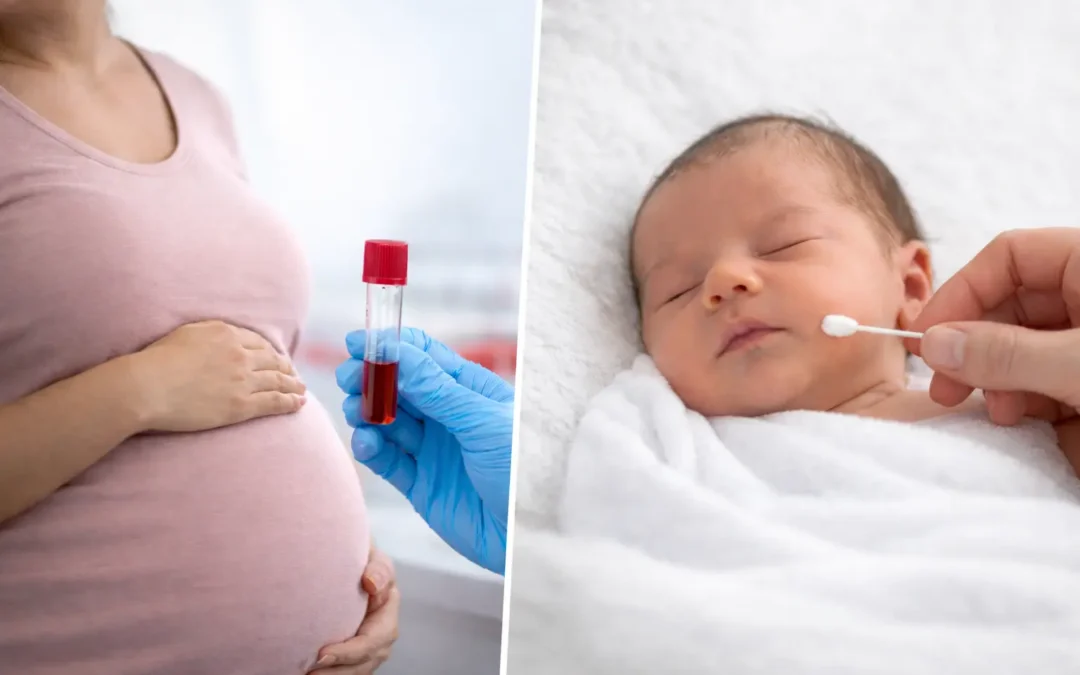
| Samples | Maternal blood draw + alleged father DNA sample (commonly a cheek swab) | Cheek swabs from the child + alleged father (mother optional in many cases) |
| Key limitation | Low fetal fraction can trigger a “no-call” or redraw | Less likely to be inconclusive when samples are collected correctly |
| Accuracy (in practice) | Highly accurate when fetal DNA signal is sufficient and the lab method is validated | Highly accurate when a qualified lab follows validated procedures |
| Turnaround | Often longer due to assay complexity and logistics | Often faster for standard cheek-swab workflows |
| Legal use | Both can be court-ready only if collected with documented chain-of-custody (ID verification, witnessed collection, documented handling). | |
| Cost | Typically higher due to complexity and logistics | Typically lower and widely available |
“Legal vs peace-of-mind” is often a bigger divider than prenatal vs postnatal. If you might need court or immigration use, plan for chain-of-custody from day one.
What is non-invasive prenatal paternity testing (NIPPT/NIPP)?
NIPPT uses the fact that small fragments of DNA from the fetal–placental unit circulate in the pregnant person’s bloodstream.
Labs analyze this cell-free fetal DNA (cffDNA) alongside maternal DNA, then compare the fetal signal to the alleged father’s DNA profile.
Because the fetal DNA component can be relatively small early in pregnancy, some cases return an inconclusive or no-call result—often meaning a redraw is recommended after additional time has passed.
For timing guidance, see when to schedule for best results
What is a traditional postnatal paternity test?
Postnatal paternity tests are usually performed after birth using cheek swabs. Many labs use well-established genetic marker panels
and statistical methods to determine whether the alleged father is included or excluded as the biological father.
In straightforward cases with proper sampling, postnatal testing often produces clear results. More complex scenarios—such as close relatives
as potential fathers—may require a different strategy or expanded marker sets.
Accuracy and false results: what “high accuracy” really means
Paternity testing is typically interpreted using likelihood-based statistics and then expressed as a probability of paternity.
Both prenatal and postnatal approaches can be highly accurate when the lab method is validated and samples are collected correctly.
What can cause inconclusive or unexpected results?
- Low fetal fraction (prenatal): more common earlier in pregnancy; may require a redraw.
- Sample quality issues: poor swab collection, contamination, or handling errors can affect any test.
- Close-relative scenarios: when potential fathers are biologically related, the lab may recommend expanded testing.
- Biological edge cases: rare genetic mutations or complex pregnancies can complicate interpretation.
If legal use is possible, start with documented collection. See
legal implications.
For deeper coverage of limitations and “can it be wrong” scenarios, see:
Can a non-invasive prenatal paternity test be wrong?
When can you test? Timing and workflow
During pregnancy (NIPPT)
NIPPT is designed for pregnancy, but many providers set a minimum gestational age because fetal DNA signal is often more reliable later
in the first trimester. Earlier testing can work in some cases, but it may carry a higher chance of low fetal fraction and redraws.
After birth (postnatal testing)
Postnatal testing is typically simpler from a logistics perspective. Cheek swabs are easy to collect, and lab workflows are generally
straightforward once samples are received.
If you need results before birth, NIPPT is usually the direct route. If you can wait, postnatal testing is often the simplest workflow.
Legal admissibility: chain-of-custody is the real dividing line
Whether prenatal or postnatal, results intended for court, government, or official documentation generally require a documented chain of custody:
identity verification, witnessed or supervised collection, and documented handling from collection to lab.
Legal vs peace-of-mind (why it matters)
- Legal testing: identity checks + supervised collection + documentation designed for admissibility.
- Peace-of-mind testing: often more flexible, but may not meet legal standards if documentation is missing.
Cost and turnaround (without listing prices)
Cost (no numbers)
In most markets, prenatal paternity testing tends to cost more than postnatal testing. The main drivers are laboratory complexity,
clinical collection logistics, and the additional analysis required to isolate fetal DNA signal from maternal background.
Postnatal cheek-swab testing is widely available and typically lower cost, especially for non-legal “peace-of-mind” use.
If you need legal chain-of-custody documentation, costs may increase due to supervised collection and documentation requirements.
Turnaround
Turnaround depends on the lab workflow, shipping/collection logistics, and whether the case requires additional review.
In general, postnatal cheek-swab workflows can be faster, while prenatal analysis may take longer due to technical complexity.
If there are multiple possible fathers or close relatives involved, disclose that upfront—labs may recommend a specific strategy to keep results clear.
Decision guide: which test should you choose?
Choose NIPPT/NIPP if:
- You’re pregnant and need results before birth.
- You meet the provider’s eligibility requirements (including minimum gestational age).
- You understand there may be a redraw if fetal fraction is low.
- You’ve confirmed the test is permitted for your intended use where you live.
Choose postnatal paternity testing if:
- You can wait until the baby is born.
- You want the simplest sample collection and workflow.
- You want to minimize the chance of “no-call” outcomes.
- If legal use is possible, start with chain-of-custody collection from day one.
Ready to take the next step?
Explore your options:
Non-Invasive Prenatal Paternity Test
or
Paternity Test While Pregnant at Home
FAQs
Can I do a paternity test while pregnant?
Yes—NIPPT is designed for pregnancy and typically uses a maternal blood draw plus an alleged father’s DNA sample. Many providers require a minimum gestational age to reduce redraw risk.
Is NIPPT as accurate as postnatal testing?
Both can be highly accurate when the lab method is validated and samples are collected correctly. Prenatal testing may be more likely to return a “no-call” early in pregnancy due to low fetal fraction.
What’s the biggest difference for legal use?
Chain-of-custody documentation. For court or government use, identity verification and witnessed/supervised collection with documented handling are usually required.
What if there are multiple possible fathers or they’re related?
If alleged fathers are close relatives (for example, brothers), the lab may recommend expanded testing or a specific strategy. Disclose this upfront to avoid delays.
Where can I get tested?
Many people test through clinics, mobile collection, or coordinated lab services. See:
Where to Get a DNA Test During Pregnancy
This article is for general educational information only and is not medical or legal advice. For pregnancy-related questions, consult a qualified clinician.
For legal admissibility questions, consult an attorney in your jurisdiction and confirm chain-of-custody requirements before testing.
About Author
The Prenatal DNA Testing Team specializes in providing reliable, non-invasive prenatal paternity testing services nationwide. With years of experience in the field, they prioritize accuracy, confidentiality, and peace of mind for families. The team works exclusively with an AABB-accredited laboratory, following strict chain-of-custody protocols and ensuring court-admissible results. Their experienced professionals guide families through a seamless and private testing process, putting the safety and well-being of both the mother and the unborn child first. Prenatal DNA Testing is dedicated to delivering a smooth, stress-free experience from first consultation to when the results are received.