

Pregnancy often comes with pressing questions – and one common question is “When is the best time to schedule a prenatal DNA test?” Timing can significantly impact the accuracy and convenience of prenatal paternity testing. Schedule too early, and there may not be enough fetal DNA for a conclusive result; wait too long, and you might endure unnecessary anxiety or miss the opportunity for early answers.
In this post, we’ll explore the optimal pregnancy weeks for prenatal DNA testing, how accuracy improves by week, the biological factors that influence timing, and tips on planning your test for the most reliable results.
Quick Answer: For most accurate results, plan to schedule your prenatal DNA test around 8–10 weeks of pregnancy. Non-invasive prenatal paternity tests (NIPP) can be done as early as week 7 or 8, but waiting until at least the 8th or 9th week reduces the chance of an inconclusive result and redraw.
Why Timing Matters in Prenatal DNA Testing
Timing is crucial because of fetal fraction – the percentage of fetal DNA present in the mother’s bloodstream. Early in pregnancy, the fetal fraction is very low, and it increases as pregnancy progresses. If there isn’t enough fetal DNA in the sample, the lab may not be able to get a clear result, leading to a “no result” outcome or the need for a repeat test (a redraw).
- Earlier weeks = lower fetal DNA, which means a higher chance the test will be inconclusive and need to be repeated.
- Later weeks = higher fetal DNA, which means more reliable detection and fewer redraws needed.
Even with high-accuracy test technology, testing too early is one of the most common reasons for inconclusive results. Waiting an extra week or two can materially improve the likelihood of getting a definitive answer on the first attempt.
Earliest Possible Time for a Prenatal DNA Test
Non-invasive prenatal paternity tests (NIPP) are often available as early as 7 weeks gestation in many clinics. This means it may be possible to attempt a paternity test using a maternal blood sample and a cheek swab from the potential father early in pregnancy.
However, earliest possible does not always mean best. If you test at 6–7 weeks, fetal DNA may be too low, which increases the chance of an inconclusive result and a required redraw.
- 7 weeks: Often the earliest offered, but highest chance of redraw.
- Provider policies: Many reputable labs start at 7–8 weeks, but prefer later draws to reduce inconclusive outcomes.
- Consult first: If testing at the earliest window, confirm redraw policy and eligibility requirements.
Best Timeframe for Accurate Results (8–10 Weeks)
For most families, the most strategic window is 8 to 10 weeks of pregnancy. This range offers the best combination of early answers and reliable fetal DNA levels.
- Sufficient fetal DNA: By ~8 weeks, fetal fraction is typically high enough for reliable analysis.
- High accuracy: When a lab can successfully obtain a fetal DNA profile, results are typically reported as 99%+ accuracy.
- Lower redraw risk: Each week later in early pregnancy typically lowers the odds of insufficient fetal DNA.
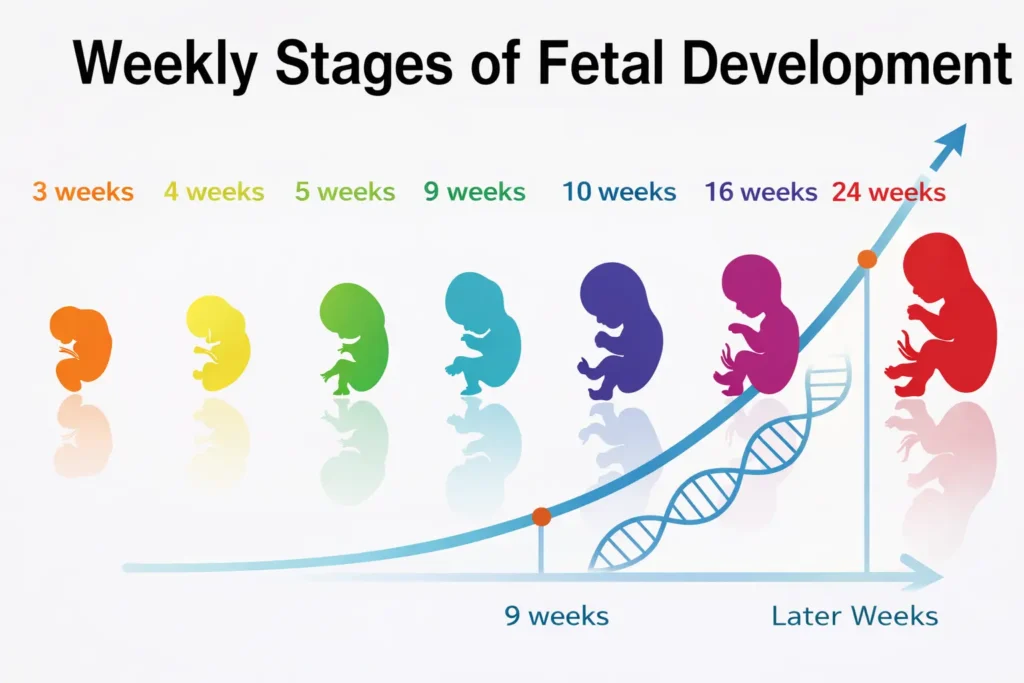
If you are eager to test as early as possible, scheduling at 8–9 weeks is typically the best balance between speed and reliability. If you want extra margin (or you have risk factors for low fetal fraction), 10 weeks can be an excellent choice.
Testing in the Second or Third Trimester
If you are further along, a non-invasive prenatal DNA test is still feasible and typically very reliable. Fetal DNA levels continue to rise throughout pregnancy, which means a later test often has a very low chance of an inconclusive result.
- Second trimester: Fetal DNA levels are generally abundant and stable.
- Third trimester: Testing is still possible, though some families may choose to wait for postnatal testing after birth.
- No added “accuracy boost”: Once fetal fraction is sufficient, later testing doesn’t necessarily increase the reported probability—it mainly reduces the chance of a redraw.
Factors That Can Affect the Best Timing
While 8–10 weeks works well for most pregnancies, certain factors may influence whether you should schedule closer to the later end of that range.
- Maternal BMI: Higher BMI can correlate with lower fetal fraction, increasing the chance of redraw if testing too early.
- Twins or vanishing twin: Some labs may require special handling or later testing. Always inform the lab.
- IVF/donor conception: Not usually a timing issue, but disclose details to the lab to avoid confusion.
- Recent pregnancy loss: Rarely, residual fetal DNA may complicate results if pregnancies were close together.
- Blood transfusion or transplant history: Mention this to the provider, as it may impact DNA interpretation.
How to Plan Your Test for Optimal Results
Beyond choosing the right week, planning and logistics matter. Use the checklist below to increase the chance of a smooth, conclusive result.
- Choose a reputable provider: Use an accredited lab and confirm quality standards.
- Schedule at the optimal week: Aim for 8–9 weeks (or 10 weeks if you want extra margin).
- Prepare for collection: Mom will do a blood draw; the alleged father typically provides a cheek swab.
- Bring identification: Especially important if you need court-admissible results.
- Disclose relevant medical details: Twins, IVF, recent miscarriage, or other factors should be shared upfront.
- Confirm turnaround time: Ask how long results take and whether expedited processing is available.
- Understand legal vs. peace-of-mind testing: Legal testing requires chain of custody and third-party collection.

Wondering when to take a prenatal DNA test for the most accurate results? Learn why timing matters and discover the best weeks (8–10 weeks) to schedule your prenatal paternity test, plus factors that affect fetal DNA and how to plan for reliable results.
Related Reading
- The Role of Prenatal Paternity Testing in Modern Family Planning
- Understanding Prenatal DNA Testing Options
- How Accurate Is Prenatal Paternity Testing in the First Trimester?
- Can a Non-Invasive Prenatal Paternity Test Be Wrong? (2025 Accuracy Guide)
- Where to Get a DNA Test During Pregnancy
About Author
The Prenatal DNA Testing Team specializes in providing reliable, non-invasive prenatal paternity testing services nationwide. With years of experience in the field, they prioritize accuracy, confidentiality, and peace of mind for families. The team works exclusively with an AABB-accredited laboratory, following strict chain-of-custody protocols and ensuring court-admissible results. Their experienced professionals guide families through a seamless and private testing process, putting the safety and well-being of both the mother and the unborn child first. Prenatal DNA Testing is dedicated to delivering a smooth, stress-free experience from first consultation to when the results are received.